
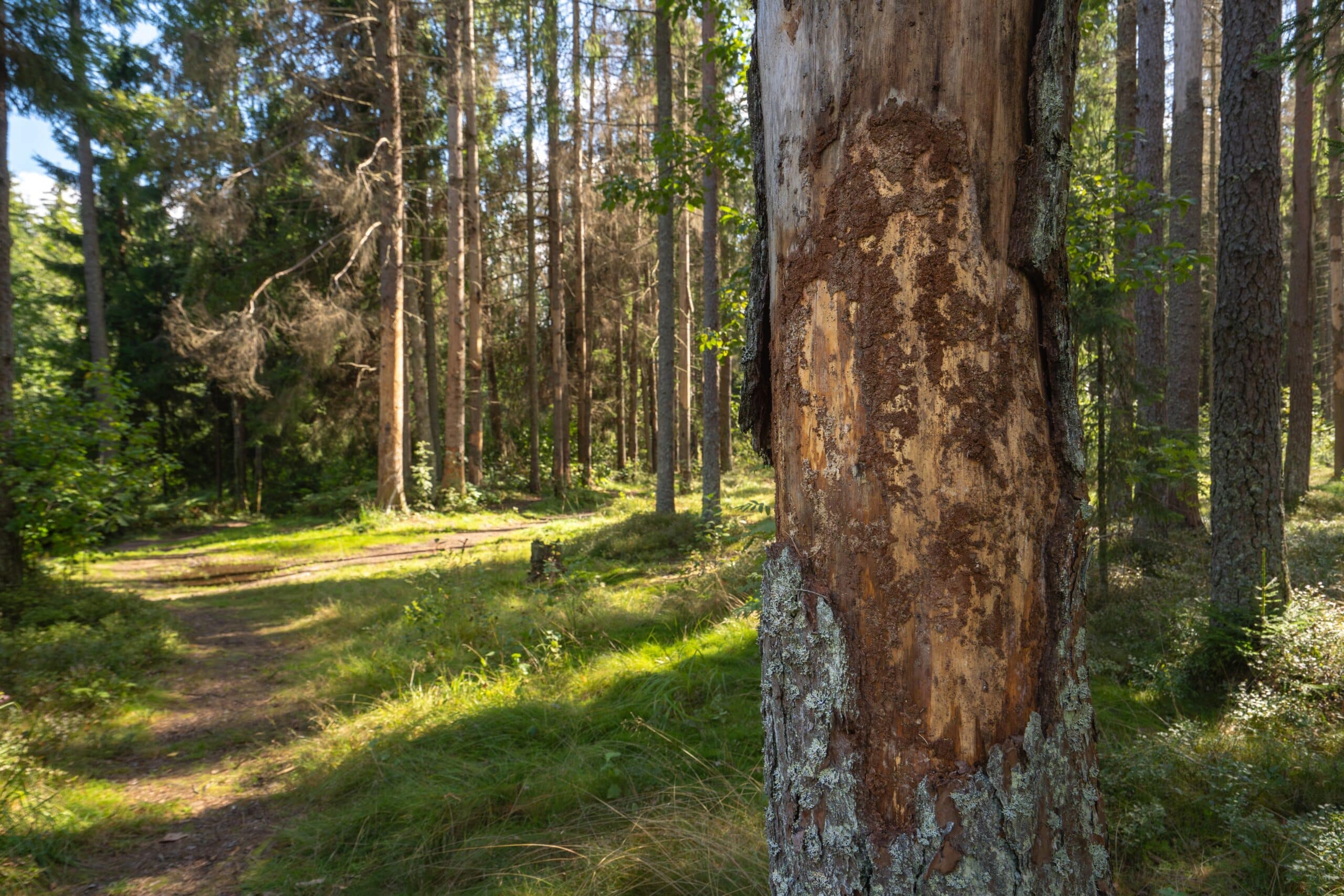
Pine trees are everywhere in the CSRA, from backyard loblollies to the tall stands lining properties across Columbia County and the nearby South Carolina counties. They’re tough trees, but they have a tiny enemy that can take down a healthy-looking pine faster than most homeowners expect: the pine beetle.
Pine beetles in Georgia have been far more active in recent years. According to UGA’s Warnell School of Forestry, the Georgia Forestry Commission documented 273 southern pine beetle spots in 2023. By 2024, that number had climbed to more than 1,600. Here’s how to spot the damage and what it means for your property.
The Pine Beetles Found in Georgia and South Carolina
Several bark beetles attack pines in our region. They’re all small, dark, and cylindrical, but they don’t cause the same level of damage.
- Southern pine beetle: About 1/8 inch long, it’s the most destructive of the group. At high population levels, it can kill large numbers of healthy pines over many acres.
- Ips engraver beetles: These usually go after trees that are already stressed or damaged. They tend to kill a few trees at a time rather than whole stands.
- Black turpentine beetle: At about 1/4 inch, it’s the largest. It typically attacks the lower trunk, from the ground up to about 12 feet, and usually affects scattered individual trees.
South Carolina is seeing activity too. Clemson University reported that 2024 brought the state’s biggest southern pine beetle activity in 20 years, and flagged Edgefield and McCormick counties, both a short drive from Augusta, as areas of concern for 2025.
Signs of Pine Tree Beetle Damage
The trouble with pine beetles is that the most obvious sign, a brown crown, shows up last. By then, it’s usually too late to save that tree. Catching pine tree beetle damage early means looking closer at the trunk.
Pitch Tubes
Pitch tubes are small blobs of hardened resin where beetles have bored into the bark. Southern pine beetle and Ips tubes are about the size of a dime and white to yellow. Black turpentine beetle tubes are larger, an inch or more across, and often purplish, near the base of the tree.
Boring Dust
Look for fine brown dust, like sawdust, in bark crevices and around the base of the trunk.
Small Holes in the Bark
Tiny exit and entry holes, sometimes with resin seeping out, are a sign beetles are moving in or out.
Changing Needle Color
As the tree dies, the crown fades from green to yellow, then red, then brown. Needles may drop while still green.
Tunnels Under the Bark
If a piece of loose bark comes off, look underneath. Southern pine beetles leave curving, S-shaped tunnels. Ips beetles leave Y- or H-shaped ones.
Why Pine Beetles Are a Risk to Your Property
A beetle-killed pine isn’t just an eyesore. It creates real problems that get worse with time.
- Dead pines become hazards. Once a pine dies, its wood dries out and weakens. Limbs drop, and the whole tree can fall during a storm, onto a roof, car, fence, or power line.
- Beetles spread to nearby trees. Adult beetles leave an infested tree and attack the pines around it. One infested tree left standing can lead to several more.
- Stressed trees are targets. Drought, lightning strikes, storm damage, root injury, and overcrowding all weaken pines and make them more attractive to beetles. Many Augusta-area pines took a beating from Hurricane Helene in 2024.
- Timing matters for treatment. Once southern pine beetles or Ips beetles are well established inside a tree, it usually can’t be saved, and removal is often the only practical option. Infestations caught early have more options.
What to Do If You Suspect Pine Beetles
If you spot pitch tubes, boring dust, or a fading crown, don’t wait for the tree to turn brown. Acting quickly is the best way to protect the trees that are still healthy.
- Have the tree inspected. Not every dead pine has southern pine beetles, so get a professional opinion before making decisions.
- Remove infested and dead pines promptly. Taking out a heavily infested tree removes the beetles before they move on to nearby pines, and eliminates a falling hazard.
- Keep your other pines healthy. Prune out storm-damaged limbs, avoid damaging roots and trunks with equipment, and thin crowded stands so trees aren’t competing for water.
- Ask about preventive treatment. If beetles are found early, Plant Healthcare treatments can help protect the infested tree and the healthy pines nearby from further damage.
At Eben Gray’s Tree Service, we specialize in hazardous tree removal using our own cranes, so we can safely take down dead or infested pines close to homes, driveways, and power lines. We also offer pruning to remove damaged limbs and help your remaining trees stay strong.
Plant Healthcare to Stop the Spread
Removal isn’t the only option. EGTS also offers Plant Healthcare services for pines. If we catch an infestation early, while it’s still minimal, we can treat the affected tree to give it a better chance of recovery. We can also treat the healthy pines around it. This helps protect them before beetles move in and keeps a small problem from turning into a larger outbreak.
Whether you’re in Appling, Evans, Martinez, or just across the state line in South Carolina, explore our tree care services or call (706) 309-8110 to schedule an assessment. South Carolina customers can reach us at (803) 961-7134.
Frequently Asked Questions
What Do Pine Beetles Look Like?
Pine beetles are small, dark brown to black, and shaped like a short cylinder. The southern pine beetle is only about 1/8 inch long, about the size of a grain of rice, so you’re more likely to spot the damage than the beetle itself.
Can a Tree With Pine Beetles Be Saved?
It depends on how early the problem is caught. Once southern pine beetles or Ips beetles are well established, the tree usually can’t be saved. But pines with minimal infestation, and trees attacked by black turpentine beetles, can sometimes be treated. Our Plant Healthcare services can also protect surrounding healthy pines. A professional inspection is the best way to know your options.
Do Pine Beetles Attack Healthy Trees?
They prefer stressed or damaged trees. When southern pine beetle populations surge, though, they’ll attack healthy pines too.
Should I Remove a Dead Pine Tree Right Away?
Yes, especially if it’s near your home, driveway, or other structures. Dead pines weaken quickly and can fall without warning, and an infested tree can spread beetles to nearby pines.
When Are Pine Beetles Most Active in Georgia?
Bark beetles are active much of the year in our warm climate. Damage often becomes most noticeable during hot, dry stretches when trees are already stressed.